Thanksgiving Rose Centerpieces: Warm, Welcoming Ideas for the Holiday Table
Written by Alena Drazdova
Categories: Thanksgiving Decorating
Categories: Thanksgiving Decorating
Thanksgiving Rose Centerpieces: Warm, Welcoming Ideas for the Holiday Table
Roses bring a familiar elegance to Thanksgiving décor, yet they need not feel formal or out of place among the season’s rustic textures. Their layered petals add softness to a table set with linen, wood, candles, and seasonal produce, while their range of shapes and colors makes them easy to adapt to different homes and traditions. Used alone or mixed with foliage, berries, grasses, and branches, roses create a centerpiece that feels both polished and welcoming.
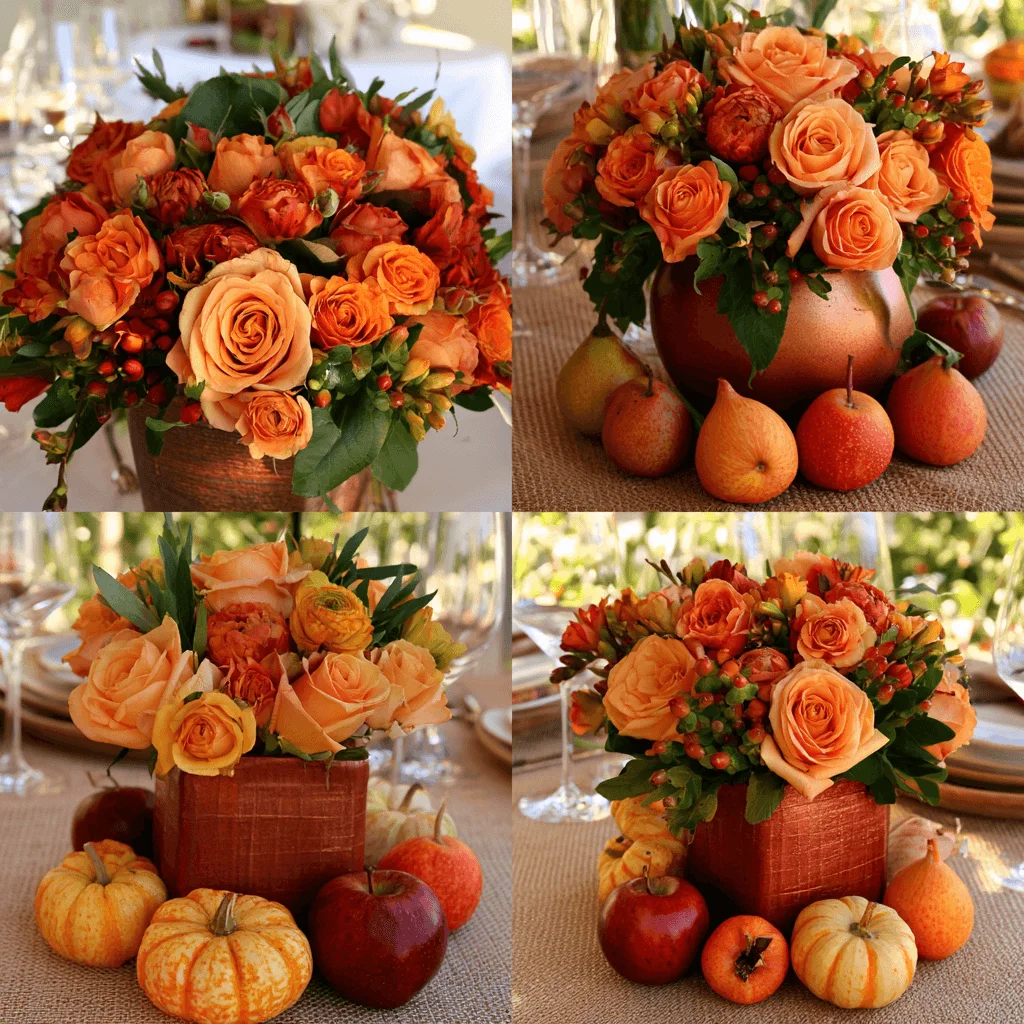
Color is one reason roses work especially well in autumn. Their natural range mirrors the palette of the season, making them easy to coordinate with existing holiday décor.
Combining several shades can suggest the abundance of the harvest, while choosing a single color creates an arrangement that feels calm and cohesive.
The best design depends on the table as much as on personal taste. Before selecting flowers, consider these practical factors:
A modest centerpiece that fits the table often feels more inviting than an elaborate display that competes with the meal.
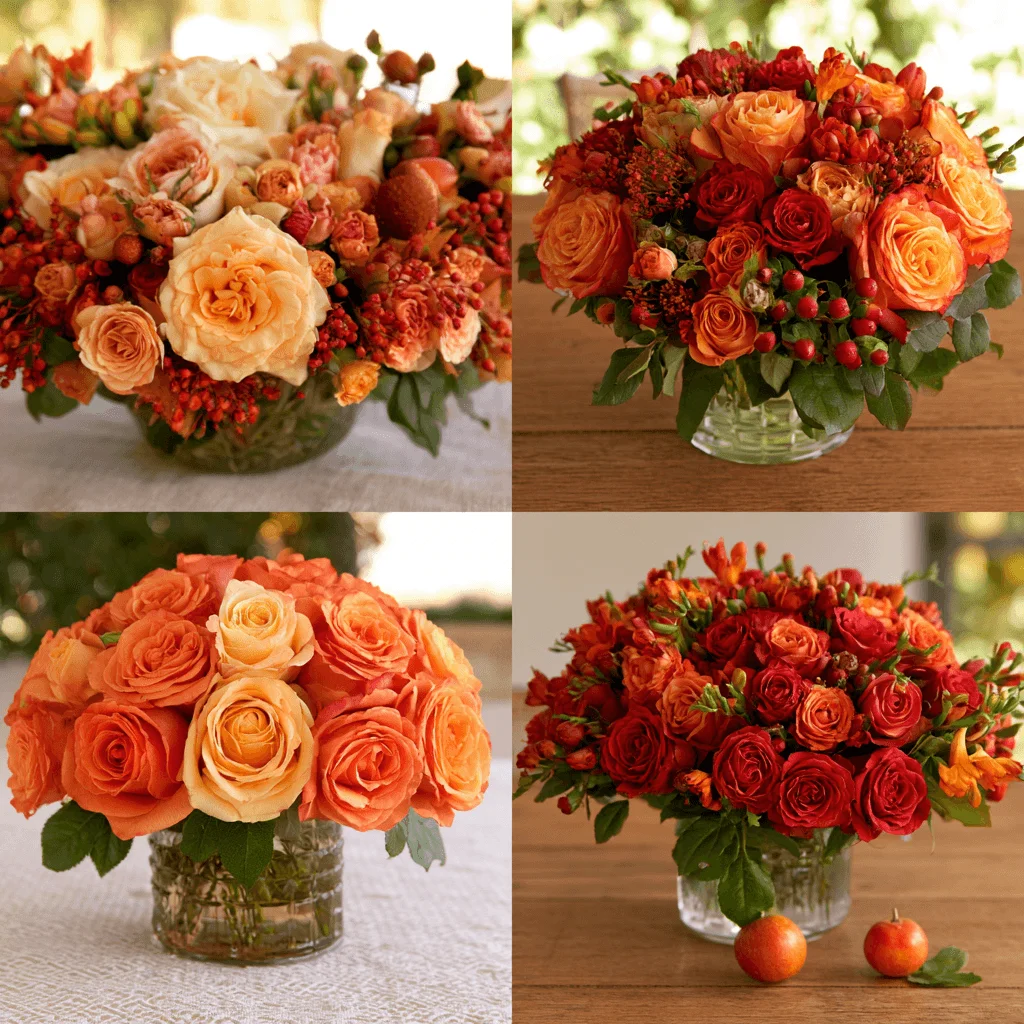
Begin with the roses, since their freshness and condition will shape the centerpiece’s appearance and longevity.
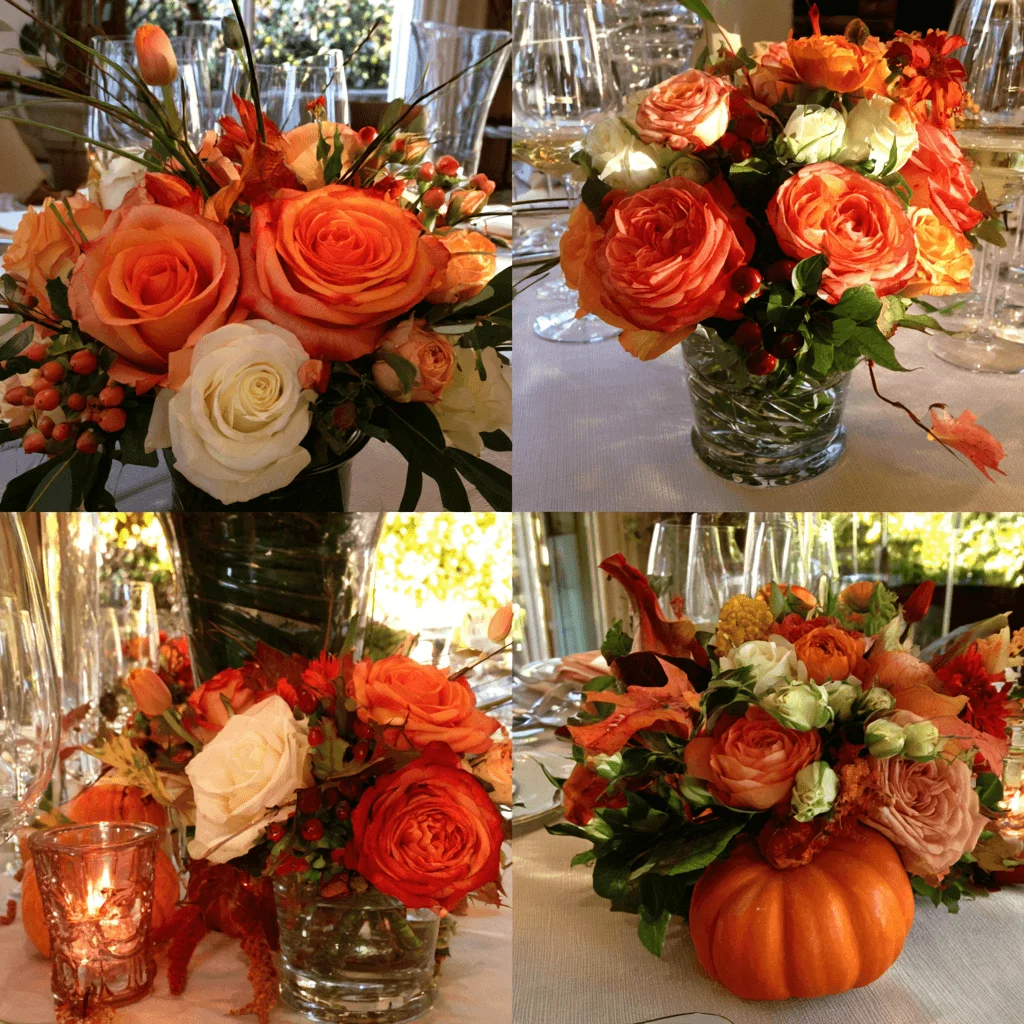
Seasonal foliage and natural materials give roses a distinctly autumnal setting. Choose accents that suit the scale of the vase and the table, trimming stems as needed so no element overwhelms the blooms.
Color coordination makes the finished display feel intentional. For a calm, cohesive centerpiece, combine roses in one color family, such as ivory and soft peach, with foliage in restrained green or bronze tones. Alternatively, use a mixed autumn palette of deep red, orange, gold, burgundy, and warm cream to echo the colors of the season.
Repeating one or two accent shades among the flowers and foliage helps connect the different materials. Keep the roses visually prominent by using accents selectively rather than packing every available seasonal element into the vase. Leave open space between some stems, and arrange berries, leaves, or wheat where they add contrast and texture without crowding the blooms. This balance creates a table display that feels abundant yet composed.
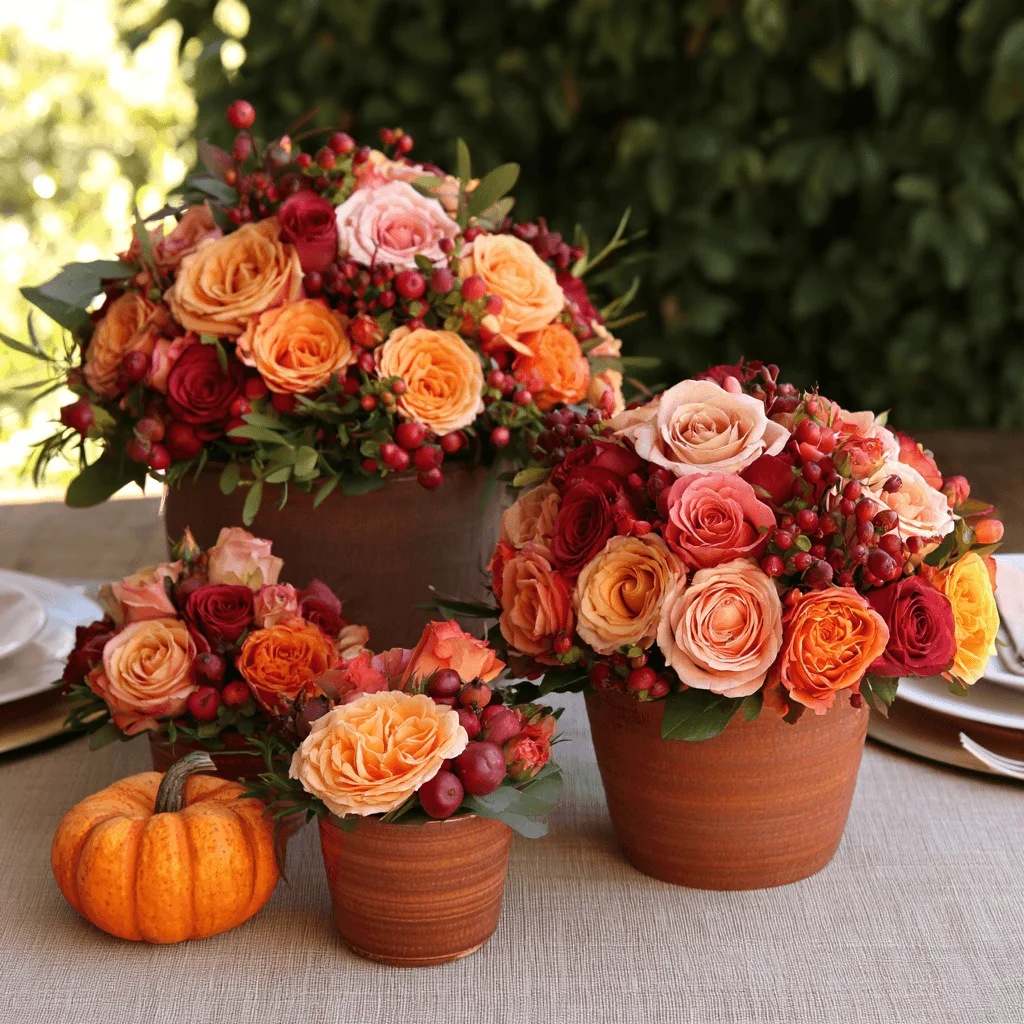
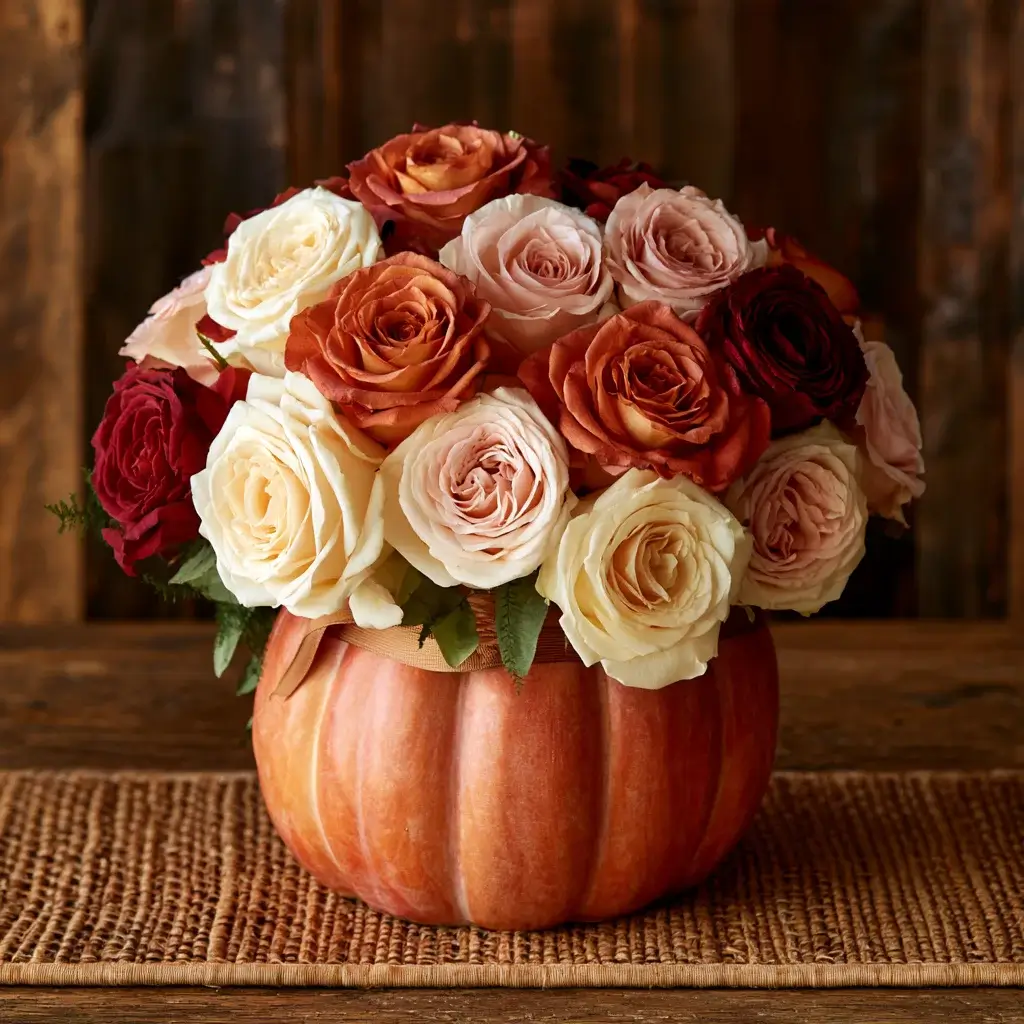
For an intimate Thanksgiving table, place roses in a small pumpkin or a low ceramic vessel. The rounded shape creates a warm focal point without taking up much space, making this style well suited to a round table or a gathering of four to six guests. Choose roses in cream, rust, blush, or deep red, and trim the stems so the blooms sit close together. A few sprigs of greenery soften the outline. Add a narrow ribbon around the vessel or set it on a woven mat for a personal touch, keeping the arrangement below seated eye level.
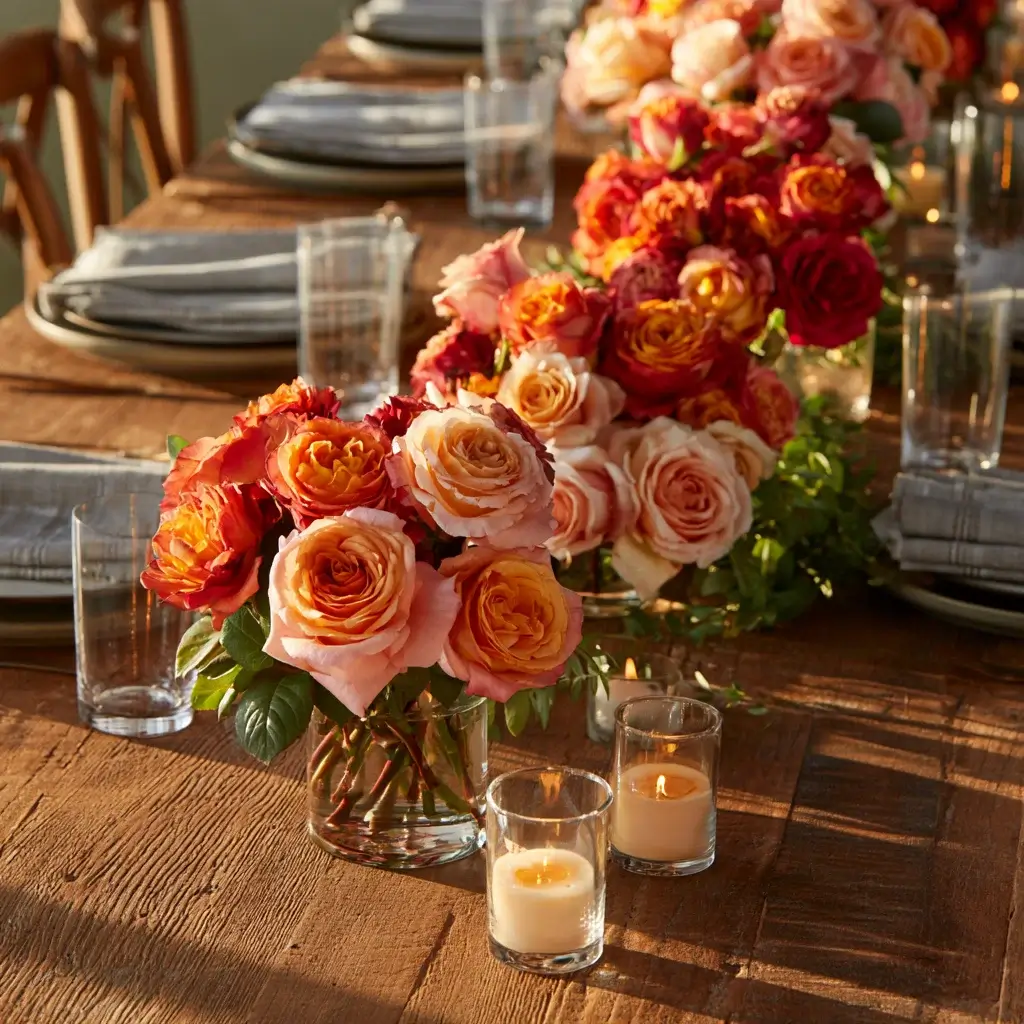
On a rectangular table, arrange short rose groupings along the center to create a connected, runner-like effect. Use several low vessels, or lay clipped foliage between compact bunches of roses, leaving room for serving dishes. Repeating one or two colors gives the display a composed look, while mixing autumnal shades feels more relaxed. Small candles placed between the flowers add a gentle glow, but keep flames clear of petals and leaves. This design easily lengthens or shortens to suit the table and number of diners.
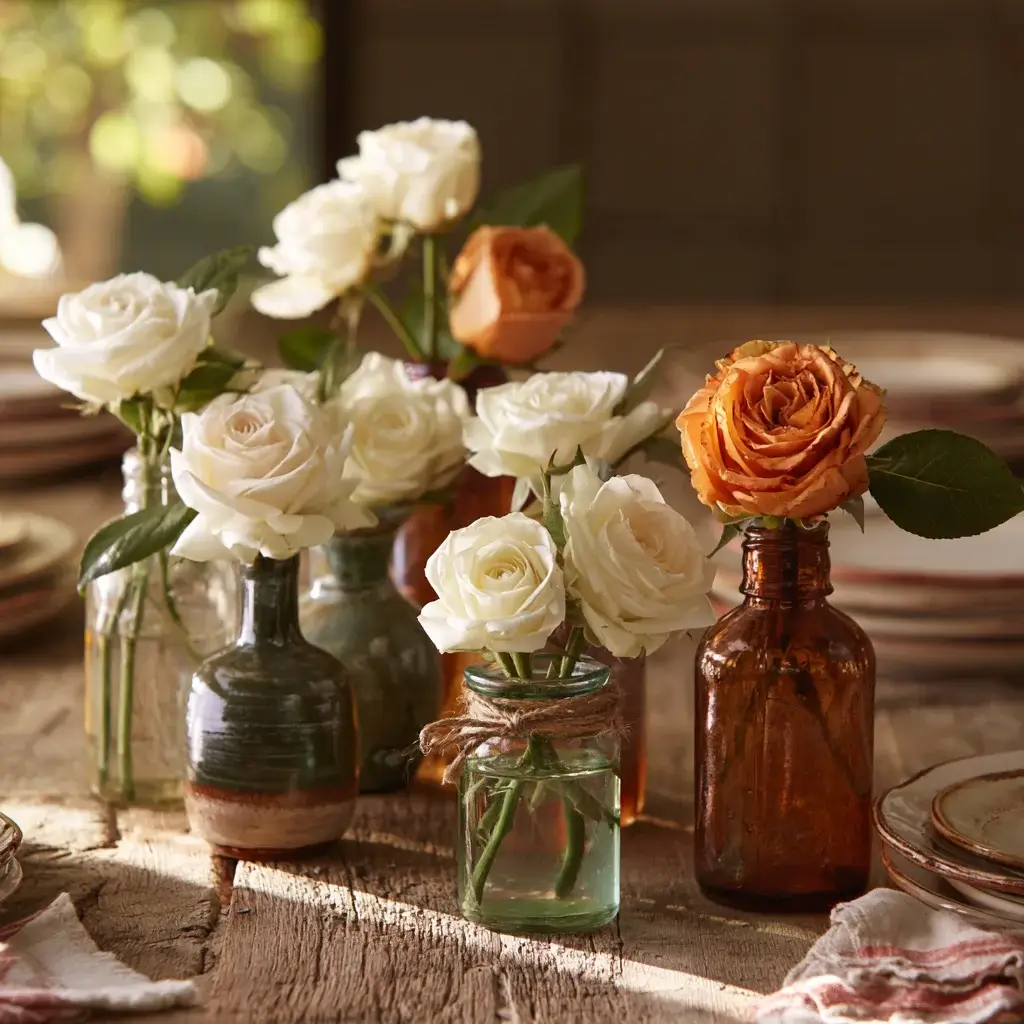
A cluster of individual roses in bud vases offers a simple, flexible option for a small gathering or a crowded table. Place the vases in a loose line or group them at the center, varying their heights slightly while keeping every bloom low. Clear glass feels understated, while colored ceramic or amber glass reinforces a chosen palette. Tie twine around a vase or add a single leaf to each stem for a natural detail. The small footprint leaves generous space for place settings and shared dishes.
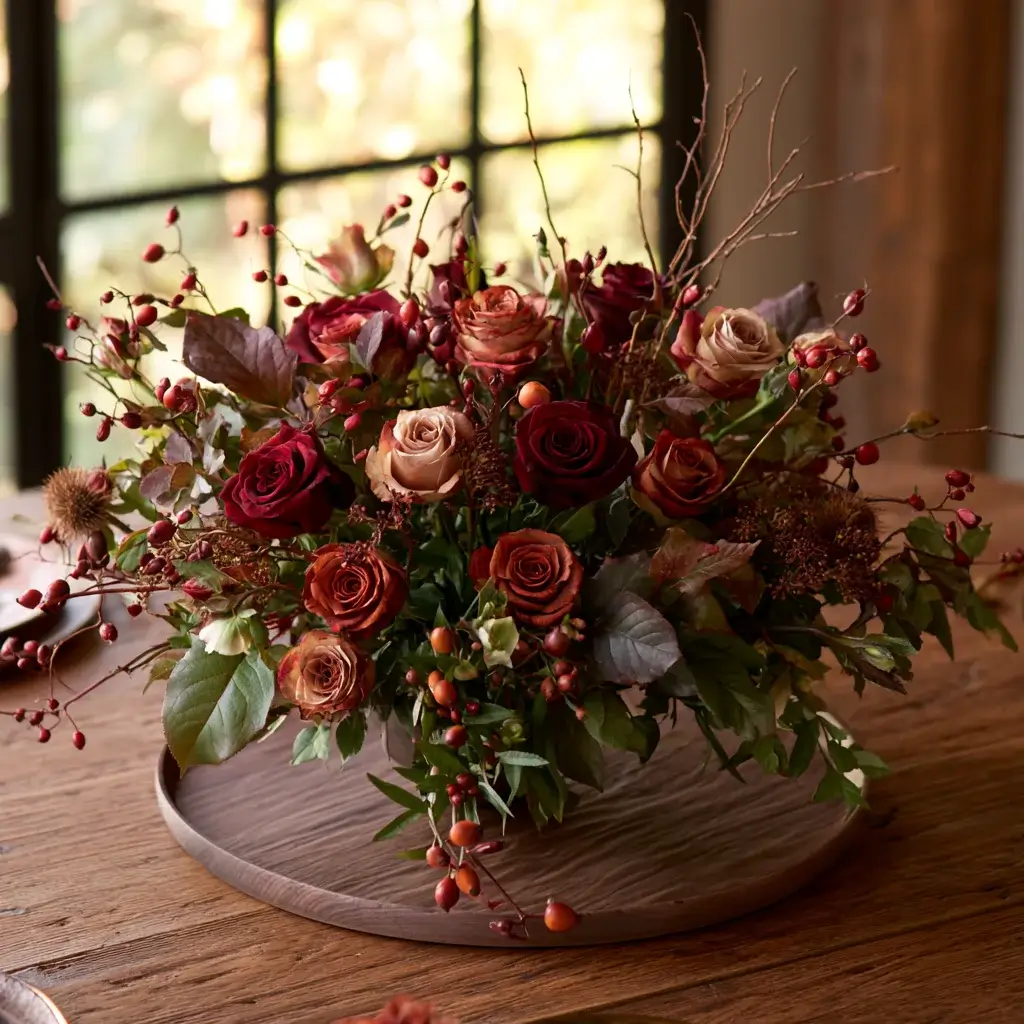
For a fuller display, combine roses with foliage, seed heads, berries, or slender branches in a broad, shallow vessel. This layered style suits a larger rectangular table or a spacious round table where guests can still see across the centerpiece. Balance rich rose colors with muted leaves, or choose a restrained palette of ivory, green, and copper. Natural textures such as a wooden tray ground the arrangement. Keep the overall profile low and spread materials outward rather than building upward, preserving clear sightlines throughout the meal.
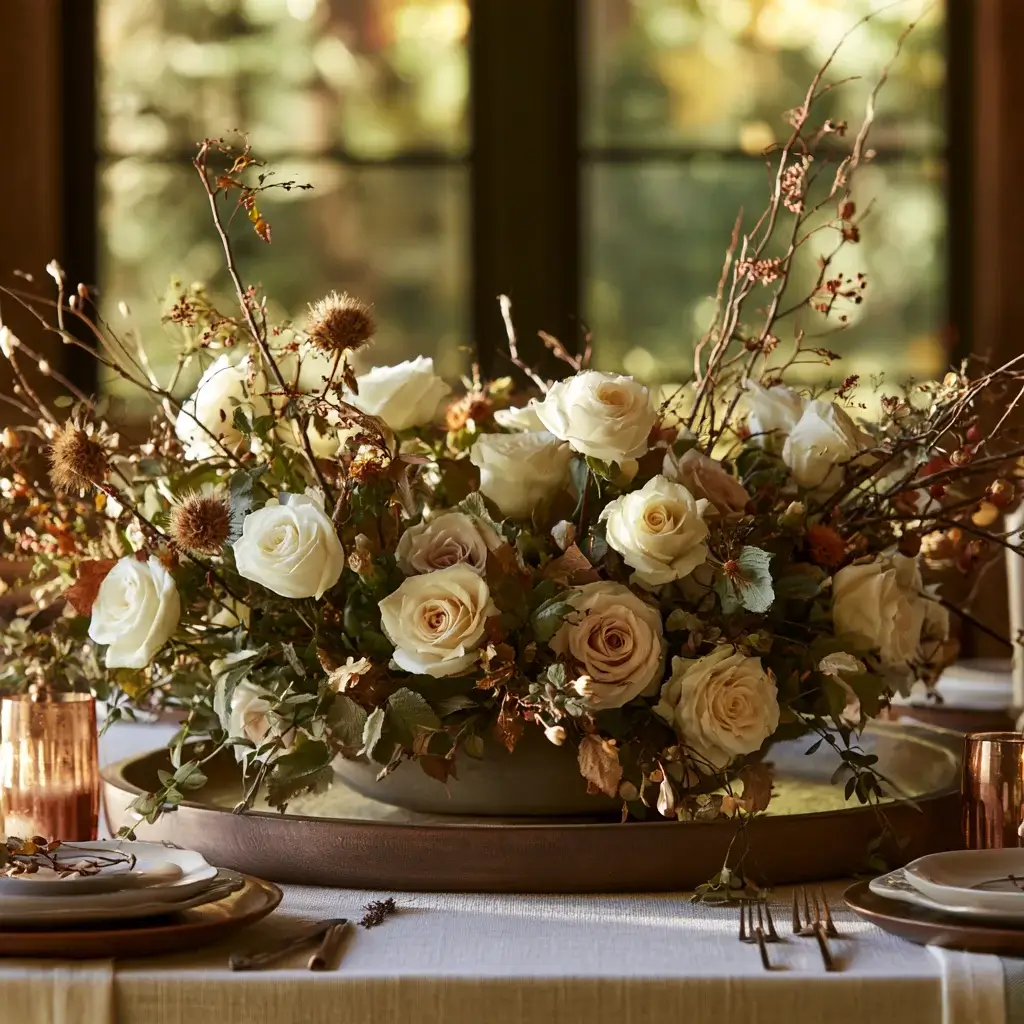
Wash the vase or vessel thoroughly with warm, soapy water, then rinse well to remove residue that could shorten the roses’ life. Fill it with fresh, clean water and mix in flower food according to the package directions. Change the water and refresh the solution regularly during the holiday.
Use sharp, clean shears to trim each rose stem at an angle, ideally while holding the stem under water or immediately before placing it in the vessel. This angled cut increases the surface area available for water uptake. Remove any leaves that would sit below the waterline, since submerged foliage decays and encourages bacterial growth.
Set up your mechanics before adding the focal blooms. If using floral foam, soak it fully in clean water with flower food, then fit it snugly in a watertight container. Never force dry foam beneath the surface. Alternatively, position a flower frog at the base of a stable vase or bowl to hold individual stems in place.
Arrange greenery first, creating a loose outline and covering mechanics without overcrowding the vessel. Add roses gradually, placing the strongest or most prominent blooms where they will be seen from the main seating angles. Turn the arrangement as you work so it looks balanced from all sides, and keep stems supported rather than tightly packed.
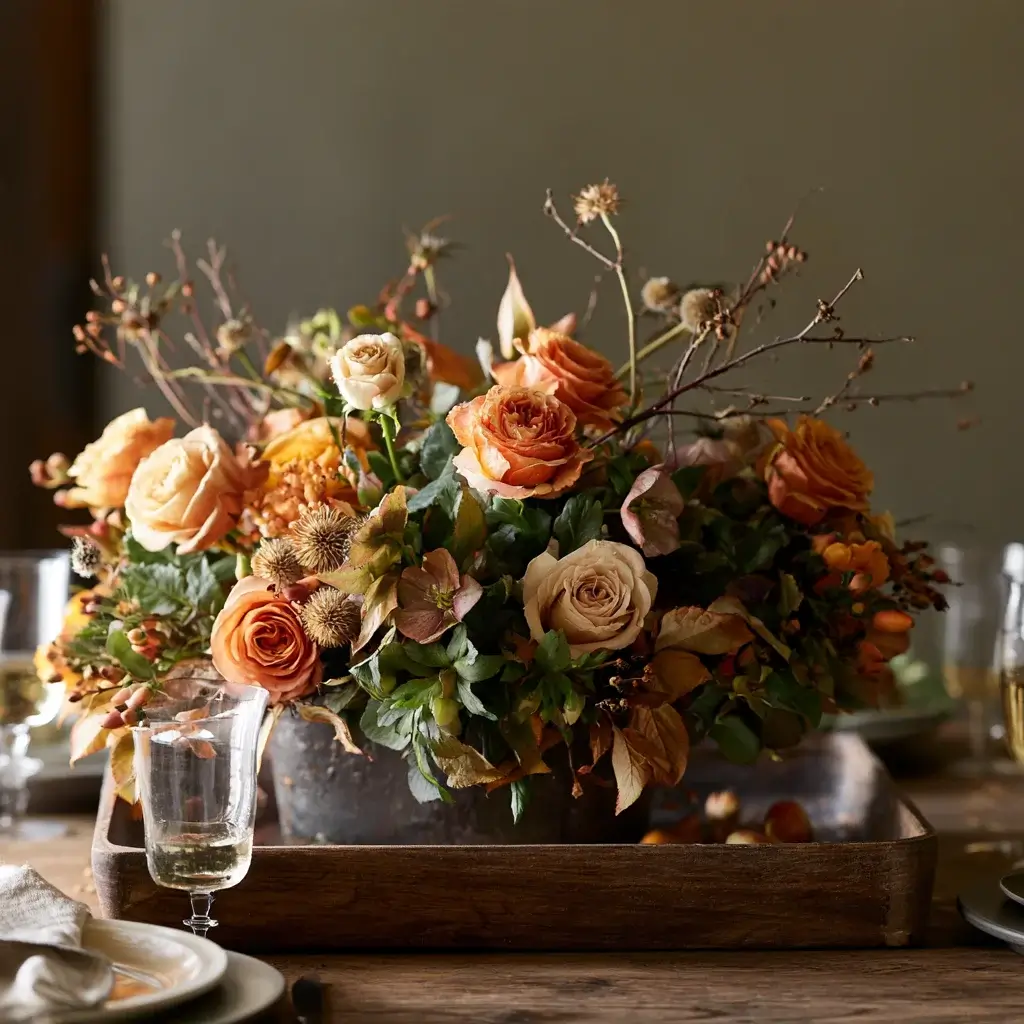
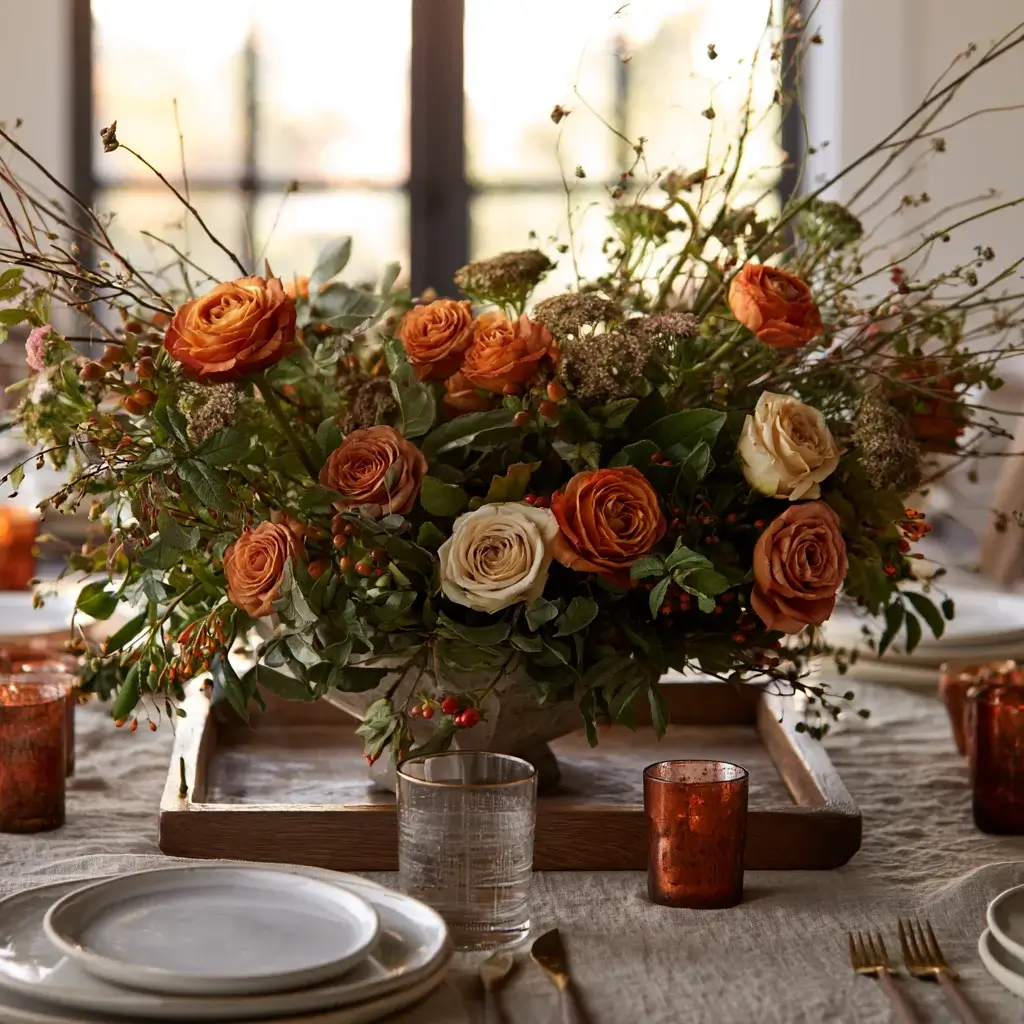
Prepare the centerpiece the day before the meal or earlier that day, then keep it in a cool place until the table is set. Follow these final guidelines to protect both your flowers and your guests’ comfort:
Choose Unscented Candles: Use securely placed, unscented candles so fragrance does not compete with the meal.
Avoid Heat and Sun: Keep the arrangement away from direct sunlight and heat sources, which dry petals quickly.
Prioritize Stability: Choose a stable vessel that will not tip when guests reach for dishes.
Keep It Low: Maintain clear sightlines and leave adequate serving space.